
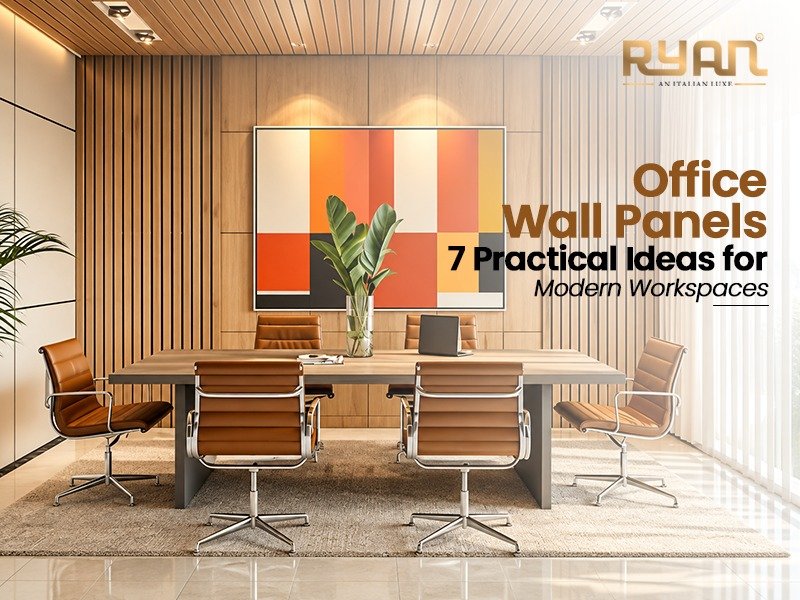
Walls in the office do more than just separate rooms. They also change the look and feel of the workplace. A plain wall can make an office look unfinished, while the right wall panel can give the space a cleaner and more organized appearance. Today, office owners are using office wall panels in reception areas, meeting rooms, cabins, workstations and other spaces. The main advantage is that different panel designs can be used according to the purpose of each area. Here are some practical office wall panel ideas that can work in different types of workplaces.
1. Install Wall Panels in Reception Area
When a visitor enters an office, they will usually first see the reception. Simple wall behind reception desk may look plain but may not add much visual interest. A small real estate office, for example, might use a textured or fluted wall panel behind its reception desk. The company name can be put in the middle with simple lighting around it. This gives a clear point of focus without too much decorating of the wall.
2. Use Fluted Panels for a Modern Look
Fluted panels are useful when you want some texture without using complicated wall decoration. For example, imagine a 10-person marketing office with white walls and simple furniture. One fluted panel wall behind the manager’s cabin can add depth to the room while keeping the rest of the office clean. Fluted designs can also be combined with plain walls, wooden finishes or simple lighting depending on the overall interior.
3. Create a Feature Wall in Meeting Rooms
Meeting rooms often have large empty walls. Instead of leaving the entire wall plain, one side can be turned into a feature wall. For instance, an IT company may have a meeting room with a large screen on one wall. The wall behind the screen can be finished off with a suitable wall panel and the other walls can remain simple. This makes the room look more finished without looking crowded.
4. Sound Absorbing Wall Panels for Noisy Areas
Noise is often a problem in offices that are very busy. Having meetings, conversations and phone calls all at the same time at work isn’t always easy. If you want to reduce noise in an area, sound-absorbing wall panels may be helpful. They’re especially useful to talk about for meeting rooms, conference areas, recording spaces and other rooms where straightforward communication is important. For example, in an open office, four employees may be attending calls at the same time. If the room has hard surfaces everywhere, sound can travel easily. Adding suitable acoustic treatment to selected walls can help make the space more comfortable. The type of acoustic panel should be selected according to the actual sound requirements of the room.
5. Use Wall Panels Behind Workstations
Large office walls behind workstations can sometimes look empty and repetitive. A simple panel design can break this plain appearance. For example, a small consultancy office may have six desks placed against one long wall. Instead of using the same plain paint on the entire wall, panels can be added to one section behind the desks. The idea is not to cover every wall. Using panels only where they add value can make the design look more balanced.
6. Give the Director or Cabin Wall a Different Finish
Private cabins are another place where wall panels can be used. A director’s cabin, manager’s cabin or discussion room can have one statement wall behind the desk. That wall can be set apart from the rest of the room with a wood look, fluted or textured panel. For example, a construction company might have a wood-finish panel behind the director’s desk, but the other walls are painted a light neutral color. This creates contrast without requiring heavy decoration.
7. Consider Maintenance Before Choosing a Panel
Office walls experience regular use. People move chairs, carry files, clean surfaces and sometimes touch the walls frequently. Because of this, appearance should not be the only factor when selecting a wall panel.
Before you set up a panel, check:
- Where will the panel be located?
- How often does the surface need cleaning?
- Is the place wet?
- Is the furniture going to hit the wall?
- Does the wall mainly look nice, or does it help with soundproofing?
- Does the design go with the lighting and furniture in the office?
For example, a panel selected for a reception wall may have different requirements from one installed near a pantry or in a busy workstation area.
