
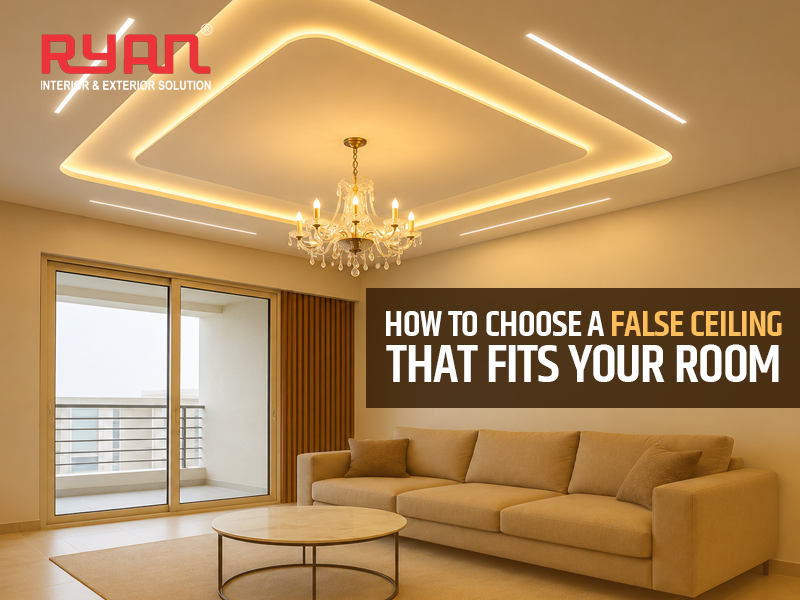
A false ceiling is essentially an extra ceiling that’s placed beneath the RCC ceiling. These days, people use it not only for decoration, but also to set up lighting, hide wires, and make a room feel a little more comfortable. Not every false ceiling works for all rooms. You have to think about material, moisture, size, and maintenance. It goes under the main RCC ceiling. Today, people use false ceilings for more than decoration – also for lighting, sound control, hiding cables, and comfort.
First, understand this: Why do you need a false ceiling
- Making the room look clean and modern
- Hiding electrical wiring, AC ducts, and pipes.
- Making lighting better and more stylish
Understand False Ceiling Materials in Detail
Gypsum False Ceiling
Gypsum powder is mainly for gypsum ceilings. Smooth finish, lots of designs. But too much humidity or water may cause sagging, soft spots, or stains.
POP (Plaster of Paris) False Ceiling
POP ceilings use plaster powder. This allows for detailed and customized designs. POP ceiling can’t handle moisture. A damp environment can cause ceiling materials to lose their original finish. Installation is slow. And maintenance is also somewhat high.
WPC False Ceiling
WPC false ceilings use PVC resin/PVC powder. WPC ceiling material handles water, is termite-free, and moisture-resistant. Perfect for the kitchen, bathroom, balcony, and humid areas. Maintenance almost nothing.
Consider Ceiling Height and Room Size
Ceiling height has a direct impact on design.
- Low-height rooms → A simple and flat false ceiling is best.
- High-ceiling rooms → A layered or designer ceiling is possible.
Lighting Planning is Very Important
One of the main benefits of a false ceiling is lighting integration.
- Recessed LED lights
- Cove lighting
- Spotlights
- Indirect lighting
Sound and Thermal Comfort
False ceilings aren’t just for looks.
Acoustic ceiling works best in an office, a meeting, or a home theater. It also helps reduce heat and makes the room comfortable.
Maintenance and Life Span
Gypsum ceiling → Regular inspection is required in the gypsum ceiling.
Stains or sagging may occur over time.
POP ceiling → Hairline cracks may appear over time. Repainting and repairs are often required.
WPC ceiling → low maintenance, almost no repair needed, long-lasting or strong material
Matching with False Wall Panels
False ceilings work well with decorative wall panels. They are often used around TV walls and feature walls. Planning both together creates a smooth design. It helps the room feel more elegant.
Understanding the Costs
- Materials
- Design
- Lighting
Summary
Gypsum and POP ceilings offer attractive designs, but they may require extra care in humid areas. WPC false ceilings are water-resistant, moisture-resistant, and low-maintenance, making them highly suitable for bathrooms, kitchens, balconies, and other humid spaces.
It’s a secondary ceiling under the main RCC ceiling. Helps the room look nice, the lighting better, and the room comfy.
WPC is the most durable and perfect for humid areas.
Gypsum and POP require maintenance, while WPC requires almost none.
Yes, if simple designs and light colors are used.
Absolutely, using both together gives an interior and premium feel.
