
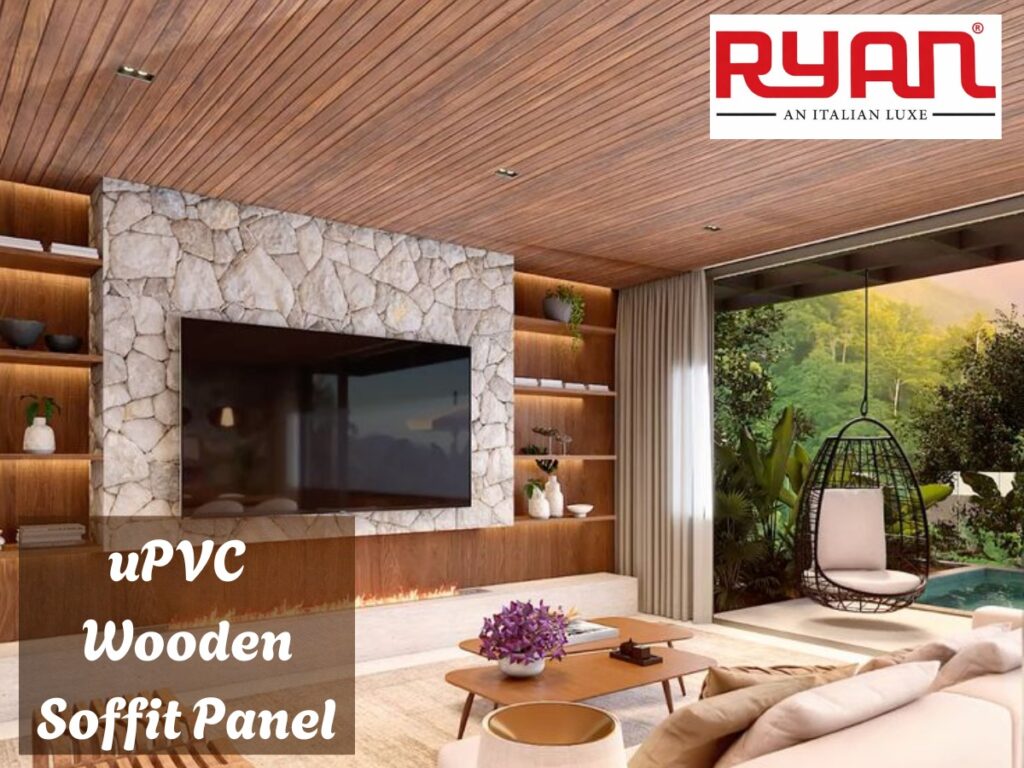
When designing balconies, terraces, porches, or any exterior ceiling area, one concern always arises how to protect the structure from moisture, termites, and long-term damage. Rainwater seepage, humidity, and pests can slowly weaken exposed slabs if they are left untreated. This is where uPVC soffit panels have become a preferred solution in modern construction.
What Exactly Are uPVC Soffit Panels?
uPVC Soffit panels are finishing panels fixed on the underside of balcony slabs, roof projections, eaves, and exterior ceilings. Their main role is to cover exposed concrete, beams, wiring, and plumbing lines, giving the space a clean and finished appearance. Unlike indoor false ceilings, uPVC soffit panels used outdoors must withstand rain, heat, humidity, dust, and insects. That’s why material selection plays a crucial role in their performance and durability.
How Do uPVC Soffit Panels Protect Against Water?
Water-Resistant Material Composition
Most outdoor uPVC soffit panels are manufactured using PVC (Polyvinyl Chloride) or treated (Wooden soffit ceiling material.
Unlike gypsum boards, PVC panels, and properly treated wooden soffit ceilings perform well against moisture and weather exposure.
- PVC uPVC soffit panels remain stable even during heavy monsoon conditions.
- They do not crack or peel due to moisture.
- Cleaning is simple and does not require special treatment.
Due to these qualities, uPVC soffit panels are widely used in balconies, terraces, and exterior ceilings where exposure to moisture is unavoidable.
How Do uPVC Soffit Panels and Wooden Soffit Ceilings Handle Termites?
Termites can be a real headache, especially in places where there’s a lot of wooden stuff. Normal wood is like candy to them, and they can slowly eat away at it, causing significant damage and costing a ton to fix.
That’s where uPVC soffit panels come in. Panels made from PVC (Polyvinyl Chloride) or Wooden Soffit are pretty much termite-proof because of how they’re made:
- PVC is fully man-made – it doesn’t have cellulose (the stuff termites eat), so they won’t touch it.
- Wooden soffit ceilings– When chemically treated and polished properly, offer strong resistance against termites and insects/.
- Properly seasoned and treated wooden soffit ceilings reduce cracking and minimize spaces where termites can settle.
Extra Benefits of uPVC Soffit Panels
- Looks good – comes in lots of colors and textures.
- UV-resistant – panels don’t fade in the sun.
- Low maintenance – easy to clean, no painting or special treatments needed.
- Some insulation –wooden soffit ceilings can help reduce heat and slightly improve acoustic comfort.
Conclusion
Protecting exterior ceilings from water damage and termite issues is an important part of long-lasting construction. uPVC soffit panels have proven to be a dependable option because they do not absorb moisture, resist weather changes, and remain stable even in outdoor conditions. Their low maintenance requirement and clean finish make them suitable for balconies, terraces, and open ceiling areas.
Wooden soffit ceilings can also be used when the wood is properly treated and maintained. With correct seasoning and chemical treatment, they offer decent resistance to termites while adding a natural look to the space. In the end, uPVC soffit panels are ideal for those looking for durability and ease of care, while treated wooden soffit ceilings work well for homeowners who prefer a traditional appearance with regular upkeep.
