
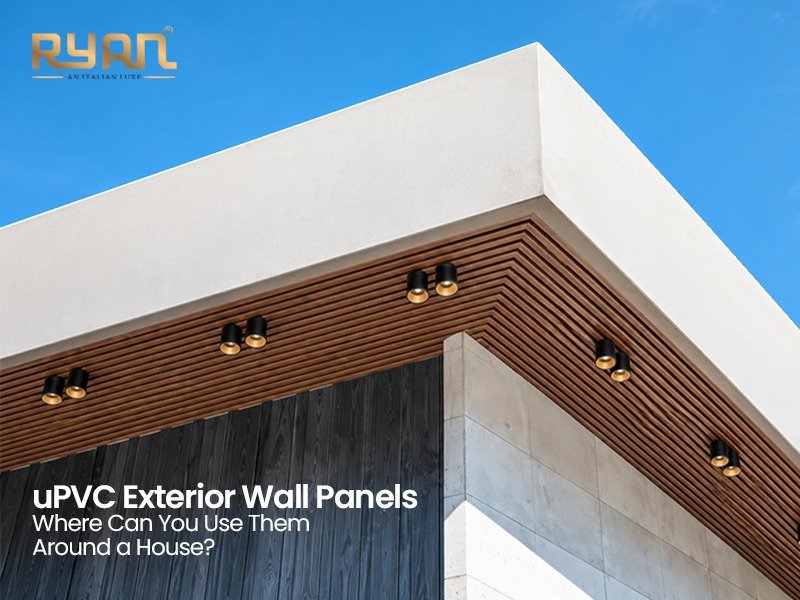
The outside walls of a house have to deal with more than just appearance. Dust, sunlight, rain, moisture and regular exposure to changing weather can make exterior surfaces difficult to maintain. This is one reason homeowners and builders are looking at different wall finishing options, including uPVC exterior wall panels. But where can you actually use uPVC panels around a house? They are not limited to one particular wall or design. Depending on the layout of the property, they can be considered for balconies, entrance areas, porch walls, exterior features and other sections where you want to add a finished look.
1. Main Exterior Walls
Plain is how large exterior walls can sometimes appear, especially if the building is painted in a simple finish. Use uPVC panels on a selected section of wall to add texture & break up a large empty wall.
For example, a two-story house may have a simple front elevation of one large wall next to the main entrance. You can go the full height but the homeowner can also make a visual feature of this section with an exterior wall panel. This method can also be used to combine different exterior finishes instead of having the same material all over the entire house.
- Entrance and Porch Areas
The first thing that people see when they go to a house is the entrance. Sometimes, a blank painted wall surrounding the main door can look unfinished, especially if the rest of the outside is modern in style. uPVC exterior wall panels can be considered for the wall around the entrance or inside a covered porch. A wood look, textured or simple modern finish can be selected depending on the home’s exterior color. For instance, if the house has a white and grey exterior, a darker panel around the entrance can create a contrast without changing the complete wall finish.
3. Balcony Walls
Balconies are another area where exterior wall panels can be useful. Many balconies have one or two solid walls that are visible from outside. These walls can become an opportunity to add some design to the elevation. A homeowner may use uPVC panels on the solid wall behind a seating area while keeping the railing and remaining surfaces simple. This can finish off the look of the balcony without making every surface look too fancy. Before picking out a panel, you should think about where the balcony is located and how much sun and rain it gets.
- Exterior Feature Walls
Not every exterior wall needs to be covered with panels. In fact, using panels only on a feature wall can often create a cleaner look. Consider a house where the front elevation is mostly painted. A vertical section beside a window or staircase can be finished with an exterior wall panel. The rest of the elevation can remain painted, creating a combination of two different surfaces. This type of application works particularly well when the aim is to add visual interest without changing the complete exterior.
5. Boundary and Outdoor Areas
Some properties also have outdoor walls, such as covered sections near a boundary, a garden seating area or other semi-exterior spaces. These areas may need a different design approach from the main house. A suitable uPVC panel can be considered where the surface and installation conditions are appropriate. For example, a covered outdoor sitting area may have a plain wall that looks empty. Adding a panel to one section can make the space feel more connected to the main home’s design.
Things to Consider When Choosing uPVC Exterior Wall Panels?
The choice of a design is only one part of the decision. Since exterior walls are exposed to environmental conditions, buyers should also check the product specifications and whether the panel is suitable for the intended application
Consider:
- Where the panel will be installed
- Sunlight and rain
- Panel quality and thickness
- Surface finish and color
- Installation requirements
- Wall condition
- Maintenance requirements
- Whether the product is to be used in the exterior
A panel for a covered porch will not have the same requirements as one designed for a fully exposed exterior wall. Knowing the application before you buy can help you avoid picking the wrong product.
Final Thoughts
uPVC exterior wall panels can be used in several parts of a house, from the main exterior wall and entrance to balconies, porch areas and selected feature walls. The best application depends on the building design, location of the wall and product specifications. Instead of covering every outside wall with the same material, think about where a panel can solve a design problem. With the right panel and finish, a plain entrance wall, empty balcony wall or large exterior section can often become a useful feature area. Measure up your space before you buy and make sure the uPVC panel you have chosen is suitable for external use and meets installation requirements. This helps in choosing a product that is compatible with the design and practical needs of the house.
FAQ
Yes, exterior-grade uPVC panels can be considered for appropriate outside walls. Always check the manufacturer’s specifications for the intended area of installation.
They can be used on selected exterior walls, entrance areas, covered porches, balcony walls and other suitable outdoor or semi-outdoor sections.
Check the panel specifications, thickness, finish, installation requirements and suitability for the amount of sunlight, rain and exposure at the location where it will be installed.
Yes. Using panels on one feature wall or a selected section can create contrast while keeping the remaining exterior simple.
