
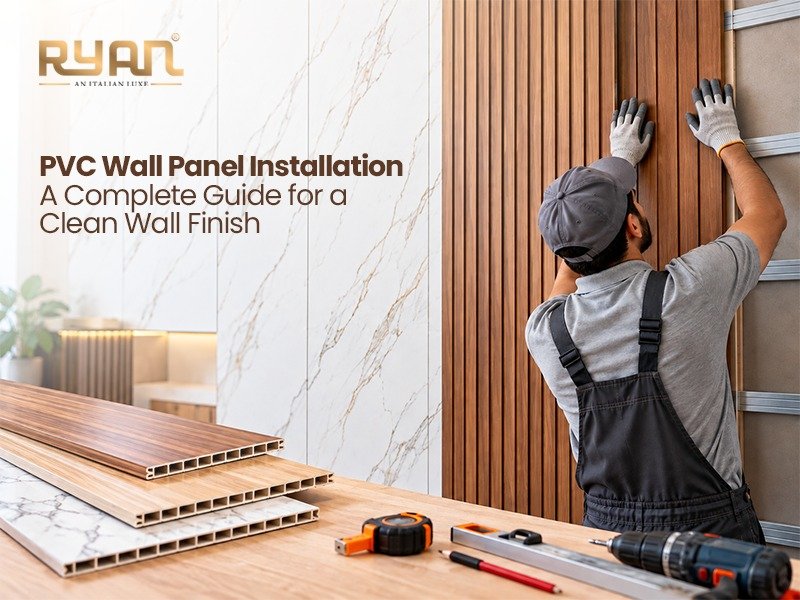
PVC wall panels are being used in homes, offices, shops and other interior spaces because they can give a wall a neat finished look without the long process involved in traditional wall finishing. But the final appearance depends not only on the panel design. Proper PVC wall panel installation is also important. A panel may look good when you see it in a catalogue, but poor measurement, uneven walls or incorrect fixing can affect the final result. This is why it is useful to understand the basic installation process before ordering PVC wall panels.
Check the Wall Before You Install
Check the state of the wall that’s already there before you start working. The surface should be mostly dry, clean, and free of dust, grease, and broken plaster. Before fixing the panels, such issues as loose paint or patches of moisture on the wall of a bedroom should be checked. Treating the problem without treating the cause of the problem can cause problems down the road. Minor surface imperfections can usually be worked out during installation, but a heavily damaged or damp wall will need further preparation.
Measure the Wall Area
One of the first steps in installing PVC wall panels is accurate measuring. Calculate the height and width of the wall. Determine the total surface area. Also consider doors, windows, electrical points and other openings.
For example, if you are installing panels on a TV wall, do not simply measure the complete wall and order the material. The area occupied by doors, windows or other fixed sections should also be considered. It is helpful to have some extra material for cutting and adjustments. This will depend upon the size of the panels, the wall layout and the design.
How to choose the right PVC wall panel
The PVC wall panels come in a range of designs, textures, colors, sizes and thicknesses. The right option depends on where the panel will be used. A simple panel may be suitable for an office or utility space, while a fluted or textured panel may be suitable for a TV wall, reception area or feature wall. Select a panel designed for that application if the wall is exposed to moisture. Always check the product specifications before installation.
Gather the Necessary Supplies
The wall condition and panel type may require different materials for the installation.
Common items can be:
- Wall panels (PVC)
- appropriate adhesive or fixing material
- Tape measure
- Cutting tools
- Measuring tools, or level
- Sealant as required.
- Accessories for finishing edges and corners
The fixing method will vary according to the product and surface. Therefore, installation should be carried out as per the product manufacturer’s recommended method.
Prepare the wall surface
Get measurements and materials ready and prepare the wall. Remove dirt, dust and loose paint from the surface. Ensure the wall is dry prior to applying adhesive or other fixing.
For example, when you are fixing panels during a shop renovation, cleaning the old wall properly can help to create a better surface to fix the new panels. This step may seem trivial, but not taking this step can affect the grip and alignment of the panels.
Start Installing the Panels
Rather than randomly putting the first panel on, start from a suitable corner or reference point. The importance of the first panel is that it determines the orientation for the other panels. Before permanently fixing the panel, check it is straight using a level. Carefully screw the panel to the wall using the fixing material suggested in the product instructions. Complete the rest of the panels, making sure the joints line up properly.
Keep the Panels Properly Aligned
A common problem encountered during PVC panel installation is misalignment. Any small mistake in the first few panels can become more pronounced as the work goes on. This is particularly important for fluted, marble-looking, and patterned panels where the design needs to flow seamlessly. Take time to check the vertical and horizontal lines during installation instead of correcting everything at the end.
Finish the Edges and Corners
After the main panels are installed, check the corners, edges and areas around doors, windows and electrical points. Cut panels carefully where required and use suitable finishing accessories or sealant according to the installation requirements. A clean edge can make a significant difference to the overall appearance of the wall.
Common Mistakes in PVC Wall Panel Installation
There are some common mistakes that can affect the final finish:
- Installation of panels on a dirty or wet surface
- Taking wrong wall measurements
- not checking the first panel with the level
- Use of wrong fixing material
- Panels cut without proper measurement
- Corners and edge finishing ignored
- Selecting a panel independent of its application
For example, if a panel is cut too early without checking the exact position of an electrical socket, the material may need to be replaced.
When to Use Professional Installation
Simple wall applications may be easier for an experienced installer, but larger projects or complicated areas may require professional installation. Some features, such as walls, commercial spaces, walls with multiple electrical points and uneven surfaces, may require more planning. A skilled installer can help with cuts, alignment, and finishing. Before ordering PVC panels for a project, discuss wall measurements and installation with the supplier.
Final Thoughts
PVC wall panel installation requires precise measurement, surface preparation, fixing, and finishing. Choosing an attractive panel is just one step. Preparing and aligning panels on a TV wall, office, shop, bedroom, or other interior space will yield a cleaner finish. Review panel specifications, accessories, and installation instructions before buying to ensure you have the right material.
FAQ
Yes, PVC wall panels are normally able to be installed over suitable existing wall finishes. The wall should be clean, dry and properly prepared before installation.
The fixing system depends on the type of panel and on the mounting surface. Some applications use suitable adhesive, while other projects may require additional fixing methods.
Are PVC panels good for bathrooms? Yes but check the product specifications and installation instructions, especially for areas that are constantly exposed to water.
