
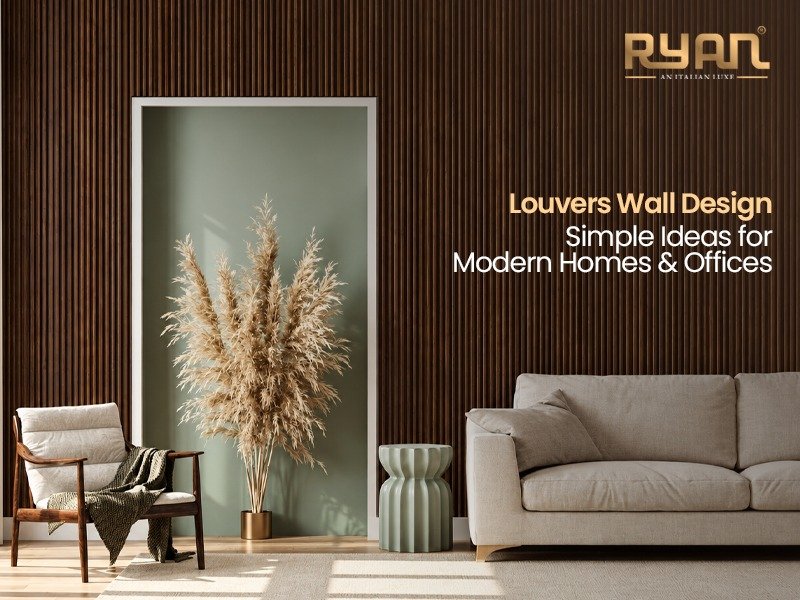
Plain walls can make a room look empty, even if the furniture and lighting are well put together. Adding lines, texture, and depth to a room without putting too much decoration on the walls is easy with a louvered design. Louvers are made up of slats or grooves that are repeated and make a sharp pattern on the wall. You can use them inside, in your home, at work, in the lobby, or anywhere else. If you change the finish and where the material is placed, louvers can look like warm wood or more modern.
Where Can Louvers Wall Design Be Used?
Louvers can be used on selected walls instead of covering the complete room. This makes them useful for creating a feature area.
1. Living Room TV Wall
The louver design is one of the common places behind a TV on the wall. For example, a basic TV wall can be made structured by adding vertical louvers as a backdrop. A wooden or neutral finish can work well with simple furniture.
You can also use louvers around a TV unit while keeping the remaining walls plain. This helps the TV area become the main feature of the room.
2. Bedroom Wall
A bedroom does not always need heavy wall decoration. Louvers can be placed behind the bed to create a simple textured background.
The vertical lines also make the wall look taller. Neutral-toned furniture will work well with a light wood finish and it is possible to create a more dramatic contrast with darker tones.
3. Offices and Reception Areas
Louvers can also be used for offices, reception areas and meeting rooms. A louver wall design behind a reception desk can create a neat background for the company logo.
They can also be used on:
- Reception walls
- Meeting room walls
- Waiting areas
- Workstation partitions
- Display areas
For professional spaces, simple colors and straight patterns can keep the design clean.
Louvers as Room Partitions
Louvers do not have to be fixed only against a wall. They can also provide a decorative divider between two rooms. A louver partition can divide a living area from a dining area without fully closing off the space. The spaces between the slats provide some visual connection between both areas. This type of design is great for apartments, offices and reception areas where a solid partition can make the space feel smaller.
Selecting the Right Louver Design
First, think about where the louver panel will go and the general interior design.
- Wall size: Pick a pattern that suits the wall space you’ve got.
- Direction: vertical louvers height; horizontal patterns breadth.
- Color: Match the end with furniture, floor and wall color.
- Material: Select a material appropriate to the site and use.
- Lighting: Good lighting can highlight the lines and shadows that the louvers create.
The panel shall be suitable for outdoor conditions for exterior applications. Exterior louvers can be considered when the design also needs to work with the surrounding exterior.
Why Use Louvers on a Wall?
One of the main reasons people choose louvers is their simple linear appearance. Instead of using many decorative elements, the repeated slats themselves create the design.
Louvers can be used to:
- Add texture to plain walls
- Create a feature wall
- Define different areas
- Add depth and shadow lines
- Create a modern or wood-inspired appearance
The final appearance depends on the material, profile, spacing, color and installation.
The End result
If you want to add more character to a plain wall without making the room look too busy, then louvers wall design can be a practical option to consider. Louvers adjust to different spaces, from living room TV walls and bedrooms to office reception areas and partitions. Before buying check the material, size, and finish of the panel and if it is suitable for the intended use. A simple wall, when the design and placement work, can feel so much more complete.
Yes. Louvers can be used behind TV units, sofas, console tables or on selected feature walls.
Yeah. You can use louver panels as decorative partitions where you want to divide spaces without completely severing the visual connection.
The right product is dependent on application and environmental conditions. If you are using it outdoors, make sure the panel you are using is for outdoor use.
Yes. Create a simple feature wall using louvers behind a TV unit. Depending on the room’s design, you can go with a wood look or a plain finish.
Yes. You can place louvers behind the bed to create a simple textured wall. Select a color that complements the furniture and overall design of the room.
