
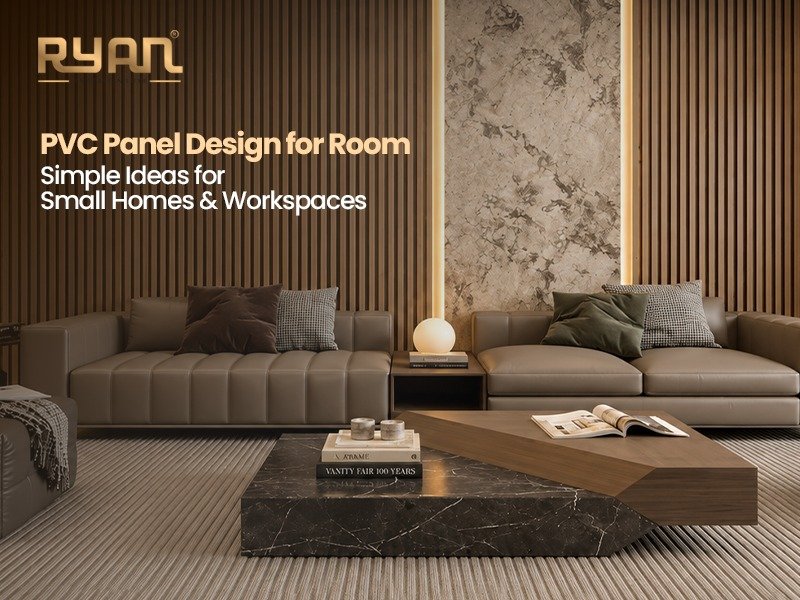
A total interior makeover is not required for every small room. Sometimes a different look is created by changing a section of the wall or ceiling. This is where a PVC panel design for a room can be useful.
1. Bedroom Headboard Wall
A bedroom is one of the easiest places to try a panel design.
Real example:
The bedroom is 10 x 12 with a blank wall behind the bed. Instead of decorating all four walls, you need only install a panel behind the headboard. The remaining walls can stay simple.
For this type of application, check the panels:
- Surface finish
- Color
- Thickness
- Panel size
2. Small Study or Work Corner
Many homes now have a little work area instead of a separate office room. For instance, you might place a study table against an unused wall in the bedroom or living room. A small panel behind the table can create the illusion of separating the work area from the rest of the room. A simple vertical pattern or plain textured finish can work well here.
3. PVC False Ceiling for a Compact Room
Ceilings are one thing that is often overlooked in a small room plan. If you want to give the ceiling a cleaner finished look, then you can consider PVC false ceiling.
Real example:
Suppose a small office cabin has a plain concrete ceiling with visible wiring and lights. A suitable ceiling panel arrangement can help organize the visual appearance of the ceiling while allowing lighting to be planned around it. Before choosing the design, check the available ceiling height.
4. Simple Ceiling Design for a Small Office
For offices, the ceiling does not always need a decorative pattern. A small reception cabin, consultation room or work cabin can use a simple panel layout with planned lighting. If you are looking for PVC ceiling design ideas for a home and office, the most important thing to consider is the size and use of the space.
For instance,
- Small cabin → simple ceiling pattern
- Reception area → clean design around lighting
- Bedroom → subtle finish with warm lights
- Larger office → wider panel layout
5. Choosing the Right Ceiling Texture
Different types of ceiling texture can also affect how the ceiling looks under different light. A nice smooth finish is good for a simple interior but a textured surface can give more detail. For example, if you have patterned furniture and decorated walls, a simple ceiling texture might be a better option. If the walls are plain, a slightly more detailed ceiling can add interest.
6. Use Panels Around an Entry Area
The entrance of a house or office is another small area where a panel can be used without redesigning the whole space. For example, an empty wall beside the main entrance can be given a selected panel finish. A narrow installation can create a visual transition between the entrance and the main room.
7. What About an Outside Wall?
An outside wall exterior wall has different requirements from an interior room. A panel selected for a bedroom should not automatically be assumed suitable for an exposed outdoor area.
For an exterior application, check:
- Weather exposure
- Moisture conditions
- UV exposure
- Product specifications
- Installation method
Always choose the right product for the actual application, not just the looks.
Quick Checklist Before Selecting a Panel
Before you order a panel for a small space, check these points:
- Measure the available area correctly.
- Decide whether it is for a wall or ceiling.
- Check the panel specifications.
- Compare the actual sample with your furniture.
- Think about the room lighting.
- Determine if the product is for outdoor or indoor use.
- Before ordering material, plan the installation area.
Final Thoughts
Small spaces do not need complicated decoration. A carefully selected wall, ceiling or corner can become the main feature without changing the entire room. PVC panels can be considered for these selected areas because they are available in different designs and finishes. The key is to choose the panel according to the application, room size, lighting and overall interior style. Instead of covering every surface, start with one wall or one section. This simple approach can make a small room feel more organized while still giving it a finished and modern look.
