
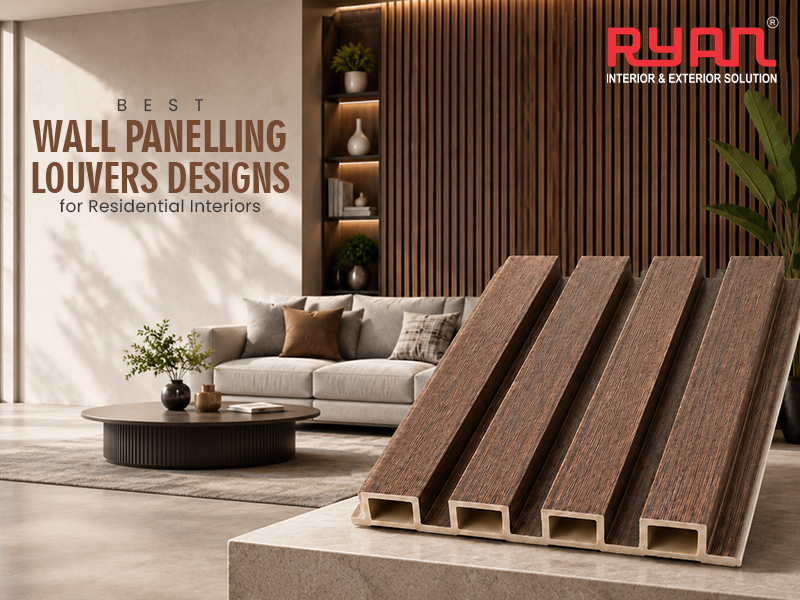
Louvers elevate the interior design with their linear patterns. They give a visual direction to the viewers, and they have a rhythm that gives a sense of order. But visuals are not the only quality of the wall panelling louvers. As a modern design element, these serve beyond a single purpose. They protect the inner walls, hide the inconsistent surfaces and improve the sound quality to a certain extent. This versatility is what makes them highly preferred by new homeowners.
Various Wall Louvers And Why Choose Them
Louvers have flat, parallel surfaces that are separated by grooves. All of them
Vertical Linear Louvers
These panels run vertically along the wall. To create the illusion of greater height, vertical wall louvres work best. These are widely used in living rooms, a wall near the entrance, and a wall behind the bed. Neutral colours like beige and teak go well with this.
Horizontal Louvers
Horizontal wall louvers are used for a wider spread. Its goal is to make walls look broader. Along with the vertical louvers on the perpendicular walls, these louvers create a balanced visual. The layout can be paired with a countertop on which decorative elements can be kept.
Fluted and Ribbed Panels
Fluted panel louvers have a flute-like structure with round lines instead of flat ones. These louvers are for feature walls where some texture is appreciated. When the surrounding decor is muted or restrained, these panels stand out with rhythmic texture.
Wood Finished Louvers
Wood finishing on the polyvinyl chloride louvres creates an inviting, warm appeal that everyone finds pleasing. These have the look of wood, minus the issues of warping, swelling and premature decay.
Solid Colour Louvers
Solid colours in matte shades provide a clean backdrop for homes that prefer minimalist designs. Charcoal, ivory, and muted pastels are some of the shades that blend with the modern furniture.
Room-Wise Design Suggestions
Living Room: Feature walls are the most highlighted architectural component of living rooms, so they need something that leaves a deep impression. For this, ribbed panels or backlit solid colour louvers fit.
Bedroom: The room where we spend our resting time should have a soft vibe without loud panels, unless you prefer them. Louvers with a linear pattern, light colours can be used as a backdrop.
Dining Area: These areas provide a scope for experimentation. Mixed patterns of vertical and horizontal louvers in the adjacent walls can create a dynamic yet structured layout.
Entrance: Slim vertical louvers paired with warm lighting create a refined first impression.
Final Notes
When you are selecting the wall panelling louvers for the various parts of your home, consider the above listed designs. To make your decision more informed, balance the pattern with appropriate lighting. Dark and matte colours should be balanced with sufficient lighting, while the brighter tones must be lit under soft lighting. Exploring the catalogue of numerous panels can get challenging without any direction or knowledge. With the team of Ryan Interior & Exterior Solution, you get complete buying guidance for installing the preferred choice of louvers in your interiors.
