
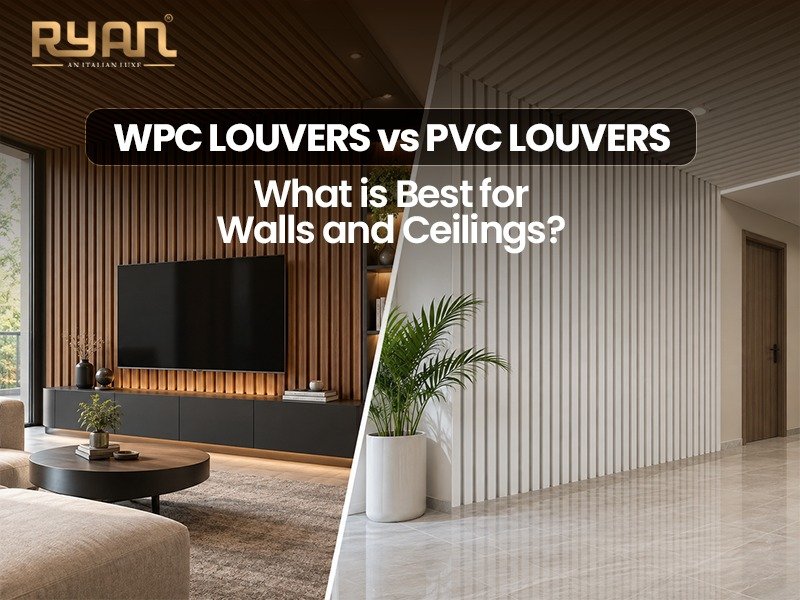
Choosing the right louver panel for your home can be difficult, especially when you are deciding between WPC and PVC louvers. While they are good for different purposes, both solutions can provide walls and ceilings with a modern, clean appearance. For example, a homeowner may choose to use WPC for a TV wall in the living room. PVC may be a better choice for a ceiling or another location that is likely to be exposed to moisture. So, which one should you choose? Let’s compare WPC and PVC louvers based on their uses, appearance, weight, and maintenance.
What are WPC Louvers?
WPC Louvers are a kind of decorative panel made from wood-plastic composite. They make a great choice for feature walls, TV units, bedrooms, offices, and other interiors. They look like wood and are popular for a warm, premium interior look.
What are PVC Louvers?
PVC Louvers are PVC decorative louvers. Available in a variety of colors, textures, and finishes, they are suitable for use on walls and ceilings. They are particularly useful when you want a lightweight and easy to maintain louver panel.
WPC Louvers vs. PVC Louvers: Key Differences
| Feature | WPC Louvers | PVC Louvers |
|---|---|---|
| Appearance | Wood-like and premium | Clean and modern |
| Weight | Comparatively heavier | Lightweight |
| Wall Applications | Excellent for feature and TV walls | Good for decorative walls |
| Ceiling Applications | Suitable | Very suitable |
| Moisture-Prone Areas | Depends on product quality | Generally suitable |
| Maintenance | Low | Low |
| Design Options | Wood-inspired designs | Multiple colors, textures, and finishes |
Which Is Better for a Living Room Wall?
WPC louvers are good as a feature wall or TV wall in a living room. The wood-inspired finish complements wooden furniture, warm lighting, and modern interiors. PVC is also a good option if you want a more basic decorative wall with choices for various colors. For a more finished look, combine a louver wall with marble sheets, lights, or plain wall panels.
Which one is Better for Ceilings?
Weight and maintenance are factors in ceilings. PVC louvers are a practical option, as they are lightweight and can be used for a neat louver ceiling design. They can be used in areas such as bedrooms, balconies, passages, and selected commercial spaces. For exterior applications, always check whether the particular panel is designed for outdoor use rather than choosing only by appearance.
Where Can You Use Louver Panels?
Both materials can be used in several applications, depending on the product:
- TV and feature walls
- Bedroom walls
- Office interiors
- Ceiling designs
- Partitions
- Reception areas
- Selected exterior applications
The right louver material depends on the location, moisture exposure, desired finish, and overall interior design.
Common Mistakes When Choosing Louvers
Before buying louver panels, avoid these common mistakes:
- Choosing only by design without checking the application.
- Using an indoor panel where an exterior-rated product is required.
- Ignoring the quality and finish of the panel
- Not checking installation requirements.
- Choosing the material without considering moisture and maintenance needs.
An Example in Practice Suppose you are doing up a living room and want a wooden feature wall behind the TV. WPC louvers might be suited to the space because of their wood-like appearance. Now, if you are designing a balcony ceiling and want a lightweight decorative solution, PVC louvers may be more suitable. So, there is no single winner. The better option depends on where you want to install the panels and what finish you need.
Why Choose Ryan PVC Louvers?
Ryan Interior & Exterior Solution has a variety of louver panel styles for contemporary residential and commercial environments. The range also includes options for walls, ceilings, and other decorative applications. Instead of selecting the panel only by price, select the panel according to your space, installation area, design preference, and required performance.
Frequently Asked Questions (FAQ)
Not always. WPC louvers are often used in interior designs where a wood look is wanted and PVC can be a practical option for lightweight wall and ceiling purposes.
Yes, you can use PVC louvers for ceilings if the product is designed for ceiling installation. Always check the manufacturer specifications prior to installation.
It is contingent upon the product. If you’re buying a product for outdoor use, find one that is rated and made for outdoor use.
Both WPC and PVC louvers are generally low-maintenance when properly installed and maintained.
Think about where it’s going to be installed, its moisture exposure, design, panel quality, maintenance needs, and whether the product is meant for outside or inside use.
